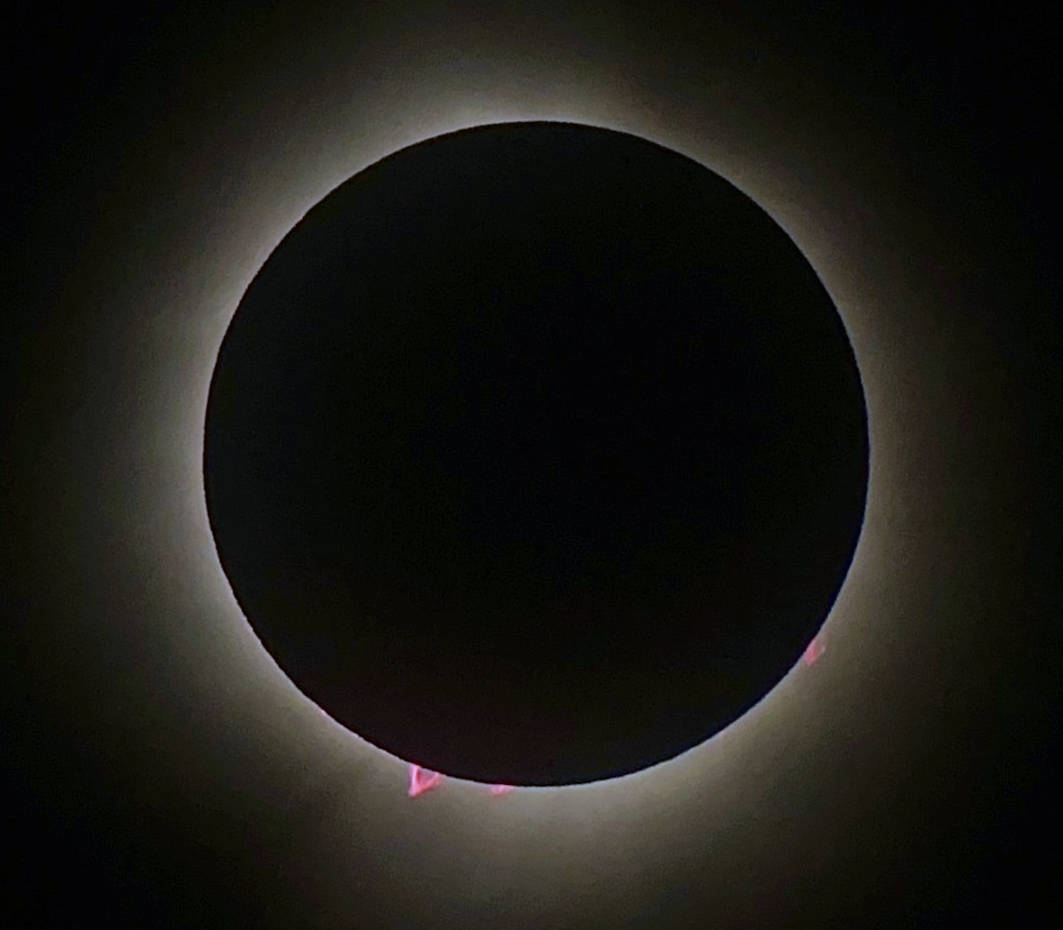
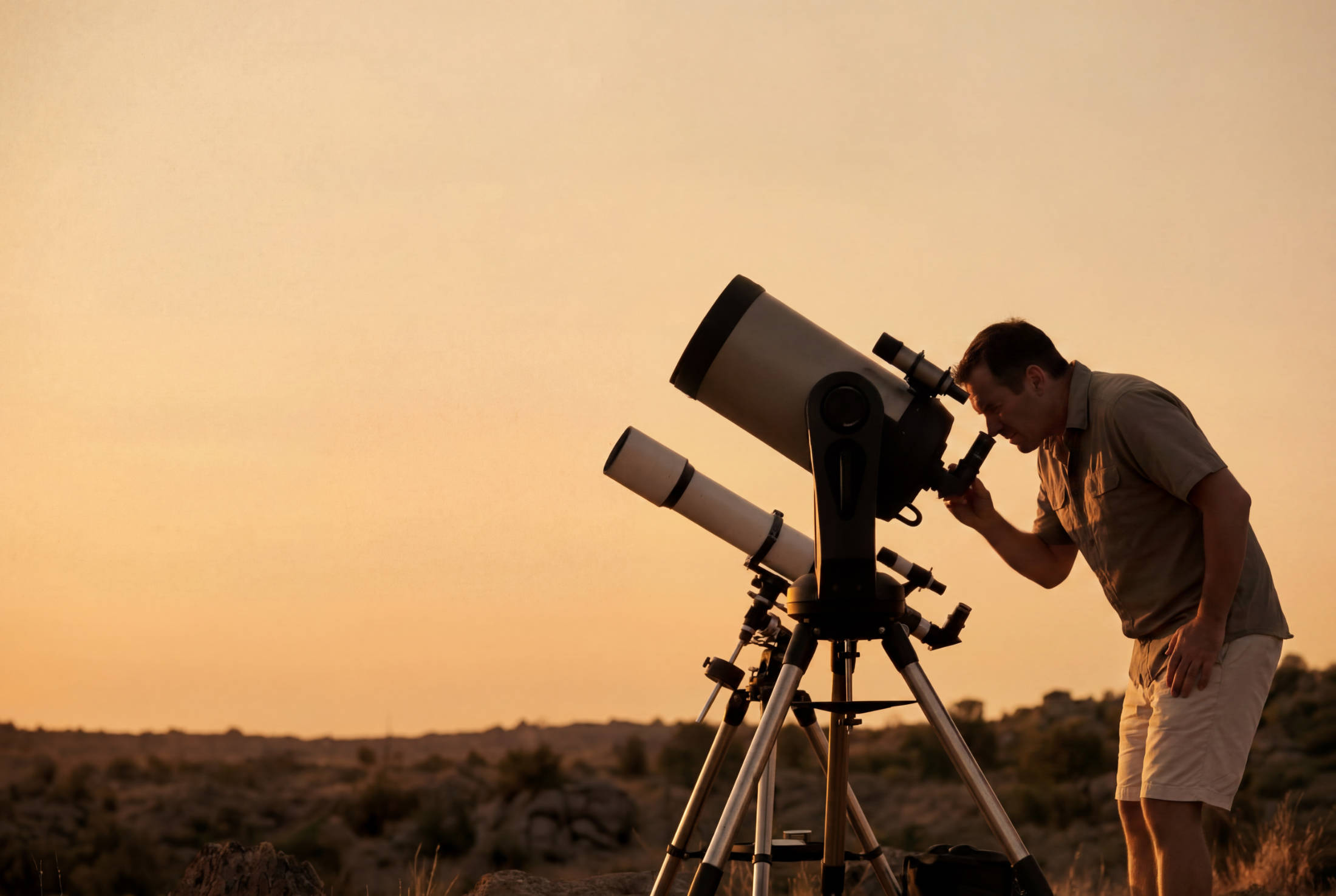
Safely observe the eclipse
The light coming from the sun is so intense that it can ignite a fire when concentrated with a magnifying glass.
To observe it safely, whether through an astronomical instrument, binoculars, or even with the naked eye, it is essential to significantly reduce its brightness using a specific filter to avoid permanant eye damage . Even when the sun is obscured by 95%, its brightness remains too intense. During a total eclipse, true darkness only descends when the sun is completely hidden.
Observing with a smart telescope, camera, or another electronic device is obviously safe for our eyes since the sun is viewed through a screen. However, it is crucial to protect the device's sensor, so a filter is also necessary in this case.
Do not directly observe the sun through an optical instrument without proper protection during the partial phase of an eclipse or when there is no eclipse.
It is only safe to observe the sun without protection during a total eclipse when the moon fully obstructs the direct sunlight.
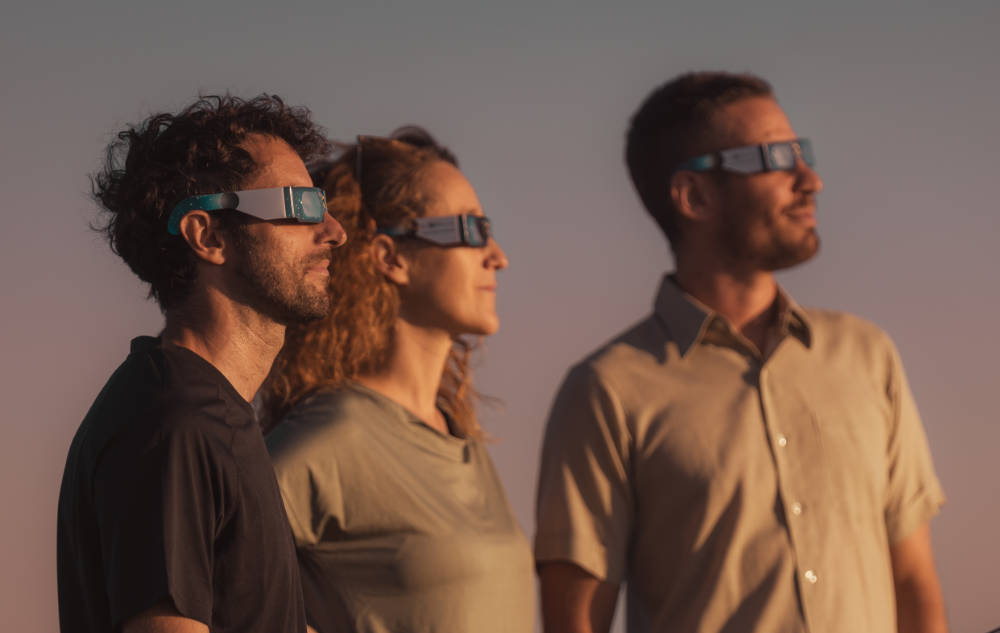
To observe the eclipse directly with your eyes, use certified eclipse glasses
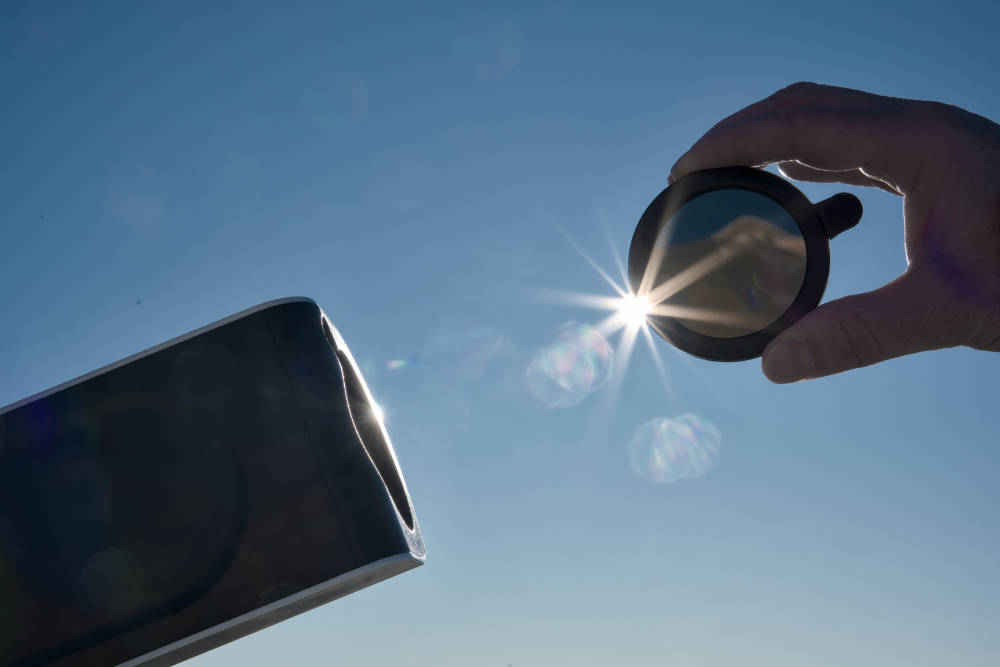
With a telescope or any optical device, use a full aperture certified filter
The best way to enjoy the eclipse
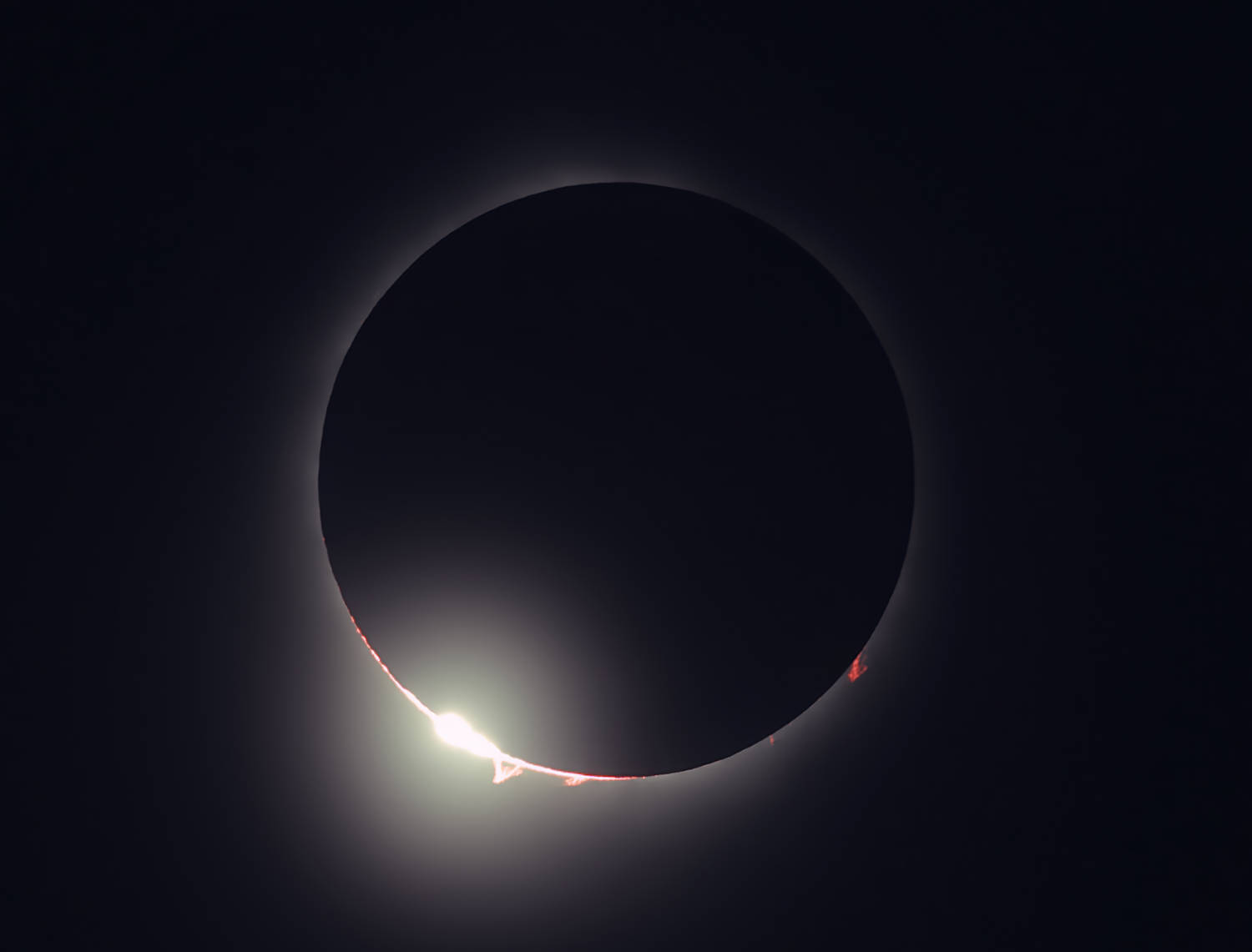
There are different ways to observe and capture the eclipse. The following chart compares how you will be able to witness each aspect of the eclipse, depending of the observation method you are using.
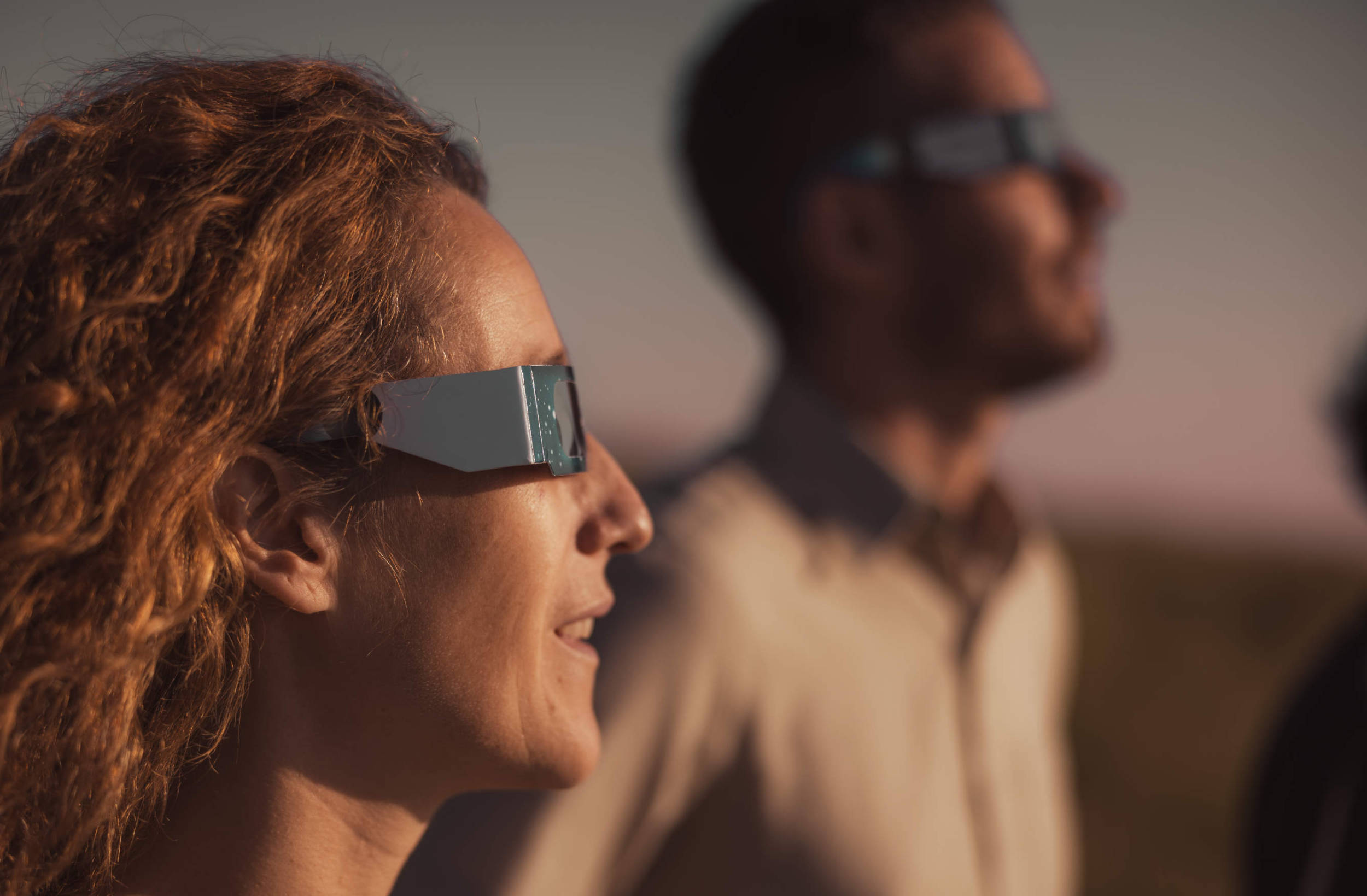
Observing with the naked eye and eclipse glasses
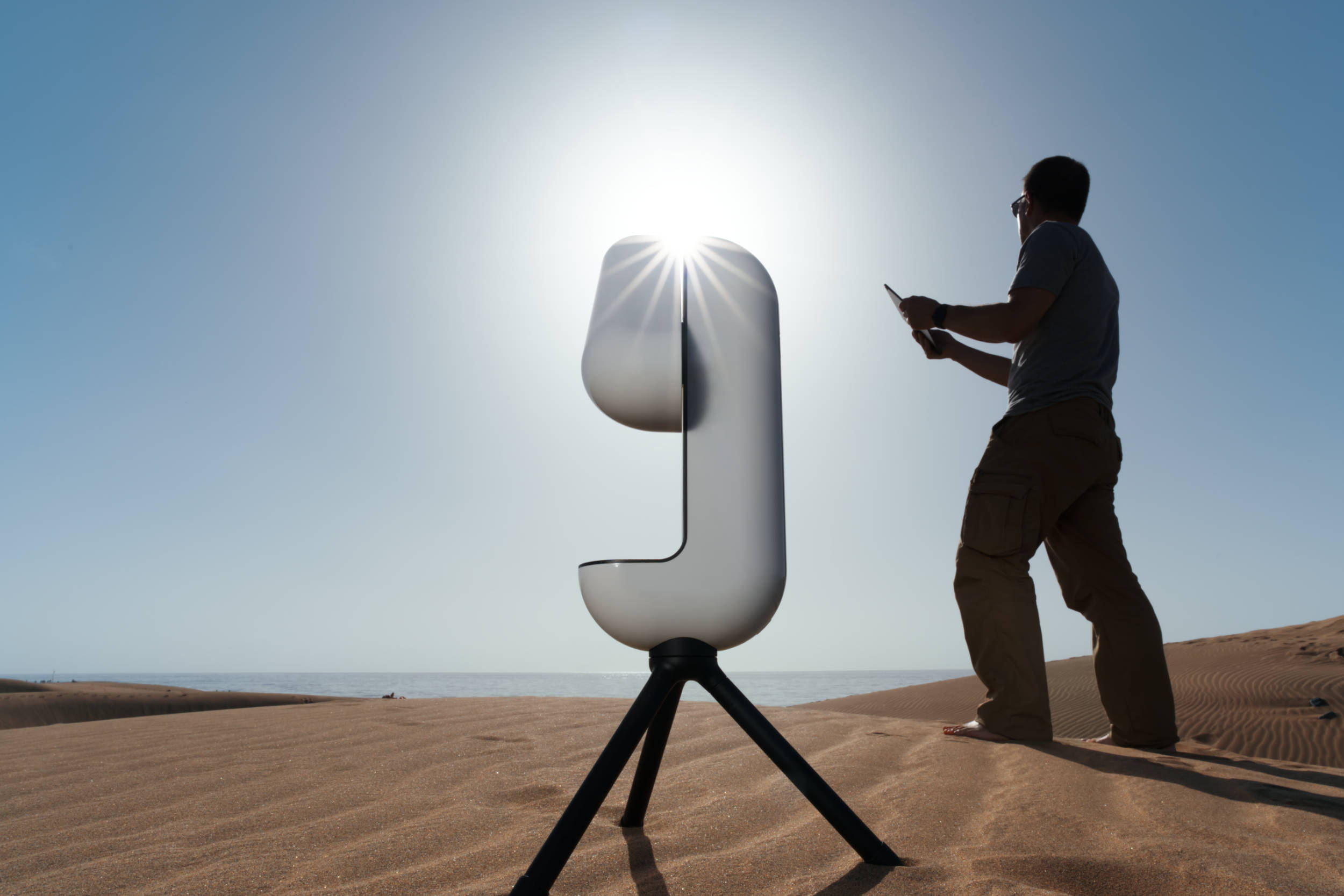
Observing with a smart telescope
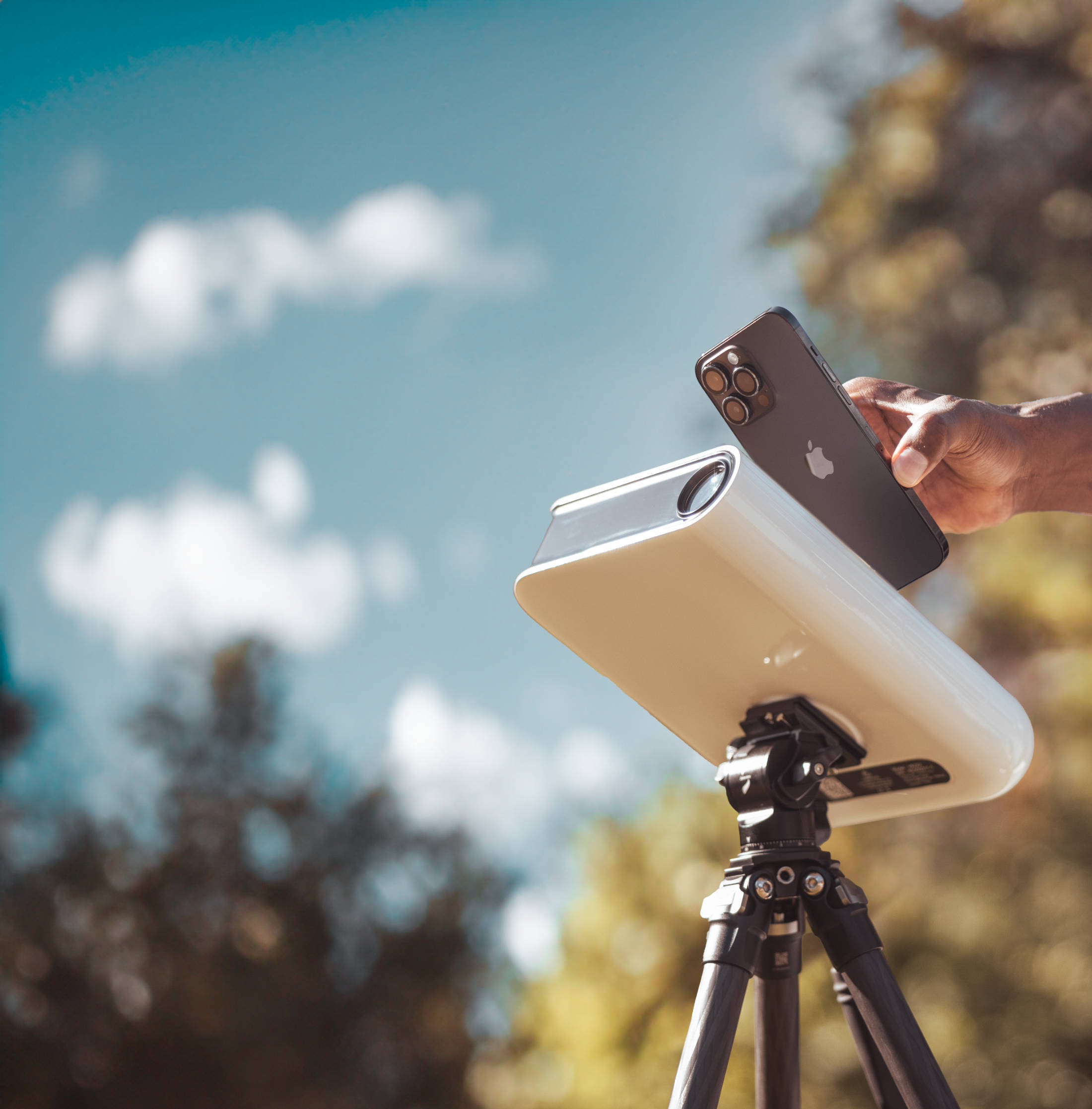
Observing with Vaonis Hestia: the smartphone telescope